


5 Key Takeaways From The Wizards' First Three Games Of The Season

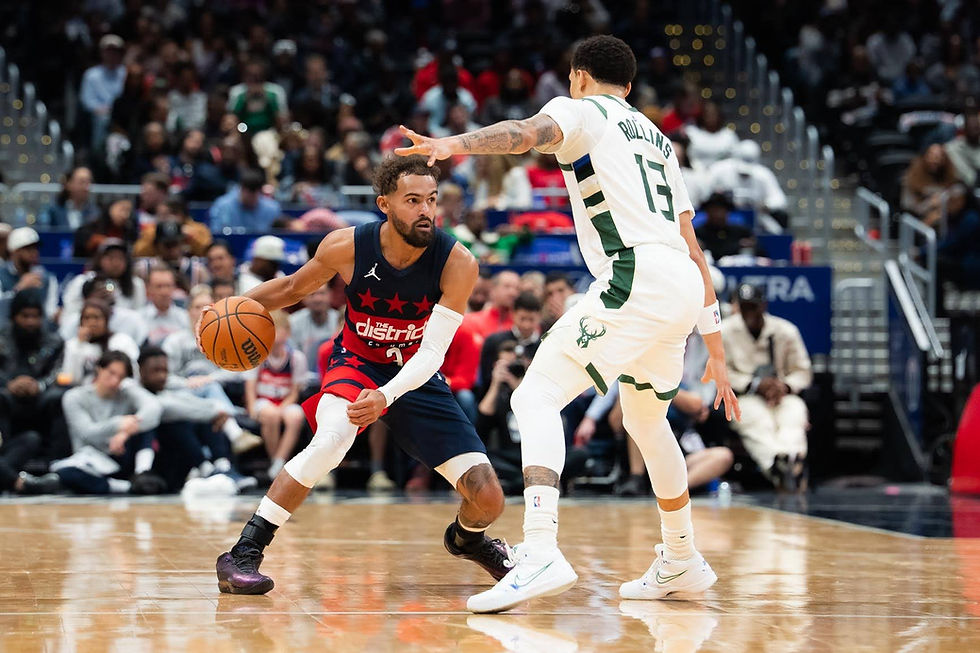
The Washington Wizards have opened the 2026–27 season with encouraging signs after several years of rebuilding. With a 2-1 record through their first three games, Washington has shown flashes of its potential, highlighted by a 124-120 road victory over the Chicago Bulls in their most recent outing.
The Wizards will look to build on that momentum when they visit the 2-1 Charlotte Hornets on Monday night.
Before then, here are five key takeaways from Washington’s first three games of the season:
Washington Is 2-1 Without No. 1 Overall Pick AJ Dybantsa, His Debut Could Change The Equation
One of the biggest takeaways from Washington's opening week is how well the Wizards have performed, despite not having their No. 1 overall draft selection.
AJ Dybantsa will miss his fourth consecutive game when the Wizards face the Charlotte Hornets on the road Monday night. He continues to recover from a left ankle sprain that has kept him sidelined since the start of the regular season.
Despite Dybantsa's absence, Washington has managed to secure two victories, including an impressive road win against the Chicago Bulls. Once the rookie returns, he is set to be another offensive weapon for the Wizards and make life more difficult for opposing defenses.
Dybantsa joining Washington's current rotation is especially intriguing. Young's playmaking ability can create quality looks for his teammates, Davis and Sarr provide strong presence near the rim, and George has demonstrating his ability to be a playmaker on both ends of the floor. Dybantsa is set to be another scoring element to the group, although his adjustment to the NBA game will be worth monitoring.
Beyond the excitement surrounding his Dybantsa’s eventual debut, Washington still has important areas to address. The Wizards have displayed promising offensive sequences, but costly turnovers and defensive inconsistencies remain concerns. Those weaknesses could become more apparent when the team faces tougher competition.
A 2-1 start offers Washington plenty of reasons for optimism, particularly with its top pick still waiting to take the floor. Dybantsa’s return could give the offense another boost, but the Wizards must continue improving their execution and defensive consistency if they hope to establish themselves as a more competitive team.
Anthony Davis Anchors Washington, While Trae Young Powers The Offense
Anthony Davis and Trae Young have quickly become the cornerstones of Washington’s offense. Their combination of interior scoring and playmaking gives the Wizards two star players who could significantly raise the team’s ceiling.
Davis made an immediate statement in his Washington debut, recording 34 points and 12 rebounds against Milwaukee. His scoring total tied Antawn Jamison for the most points in a Wizards debut.
Having a 30-point, 10-rebound double-double made him the first player in franchise history to achieve the feat in his team debut. After scoring just nine points against Toronto’s aggressive double teams, Davis bounced back with 19 points against the Chicago Bulls on Saturday.
Young has provided the offensive leadership Washington needs, averaging 22.3 points and 11.3 assists through his first three games. The star guard opened the season with 20 points and 13 assists against Milwaukee, followed by 22 points and 12 assists in the loss to Toronto, before recording 25 points and nine assists in Washington’s win over Chicago.
However, Toronto exposed a weakness on Friday by trapping Young near half court and forcing him to give up the ball. In those situations, Washington must find a way to take advantage of those openings and keep their offensive momentum afloat.
Davis’ presence inside and Young’s playmaking gives Washington a strong foundation. If the Wizards can take advantage of the opportunities created when defenses focus on their two stars, they could become a more competitive team as the season progresses.
Second-Half Surges Show The Wizards Potential, But Consistency Remains An Issue
Washington has already demonstrated that it can overwhelm opponents when its offense and defense work together. The problem is that those stretches haven’t lasted for an entire game just yet.
The Wizards opened the season against the Milwaukee Bucks, bouncing back from a slow shooting start to outscore Milwaukee 77-60 in the second half. A pivotal 21-4 run helped Washington seize control in the fourth quarter.
Against Chicago, Washington produced an even more impressive burst, outscoring the Bulls 40-20 in the third quarter. The Wizards pushed the pace, generated opportunities in transition, and built a lead that ultimately helped them survive a late Chicago rally.
However, the warning signs are equally clear. Washington struggled to contain Chicago’s transition offense in the first half, allowing the Bulls to build a 10-point advantage. The defense also lost some of its intensity late, allowing Chicago to mount a 16-4 run in the closing minutes.
The Raptors game presented another concern, as Washington struggled to establish its half-court offense and finished shooting just 38% from the field.
The Wizards have shown they can generate game-changing runs, but they must improve their defensive consistency to avoid relying on second-half comebacks.
Justin Champagnie Is Emerging As A Key Contributor For Washington
While Trae Young and Anthony Davis have drawn much of the attention during Washington’s 2-1 start, Justin Champagnie has emerged as a valuable contributor off the bench with his impact on both ends of the floor.
The 6-foot-6 forward has made an impact with his rebounding, defensive intensity, and his hustle on plays that often go unnoticed on the box score. In Washington’s 124-120 road victory over Chicago, Champagnie recorded a double-double of 11 points and 14 rebounds in 26 minutes off the bench.
He also posted a positive plus-minus in each of the Wizards’ first three games, finishing with a team-best plus-36 over that span.
Champagnie’s impact goes beyond the box score. Late in the third quarter against the Bulls, he beat a bigger opponent to a loose ball and quickly passed it to Trae Young. This allowed Young to assist Alex Sarr on a fast-break dunk.
The sequence showcased Champagnie’s hustle, awareness, while demonstrating how his effort can create easy scoring opportunities for Washington. His efficient shooting and ability to contribute without dominating possession are particularly valuable alongside primary offensive options such as Young and Davis.
Through Washington’s first two games, Champagnie converted seven of his first 11 field-goal attempts without committing a turnover, providing an efficient scoring option while keeping the offense flowing.
Champagnie is making a strong case for a regular role in Washington’s rotation by contributing in areas that go beyond scoring. If he maintains this level of play, he could become an important complementary piece as Washington looks to build a more competitive team and contend for a playoff spot.
KyShawn George Is Finding His Rhythm As A Two-Way Contributor In Washington
Kyshawn George has experienced some early-season growing pains, but his performance against the Chicago Bulls offered an encouraging sign of his potential on Washington’s roster.
After recording a career-high eight turnovers in Friday’s loss to the Toronto Raptors, George bounced back with 22 points, nine rebounds, five assists, and four blocks in the Wizards’ 124-120 victory in Chicago. Beyond the impressive stat line, his approach to the game is stood out the most.
George appeared to be more comfortable operating on the wing rather than taking on the responsibility of initiating the offense on various possessions. He attacked the basket when opportunities arose and allowed other ball handlers to create scoring chances. That adjustment coincided with a reduction in turnovers, as he finished with three against Chicago, after recording four against Milwaukee, and eight against Toronto to start the season.
Through Washington’s first three games, George has averaged 17.0 points, 5.7 rebounds and 3.7 assists while committing 5.0 turnovers per game. Although the sample size remains small, his ball security is an area that needs improvement. Toronto’s physical defense and aggressive ball pressure exposed some of his struggles as a primary initiator, making his response against Chicago particularly encouraging.
George’s defensive versatility also strengthens his value to Washington. His ability to defend multiple positions and contribute as a shot blocker gives the Wizards a two-way player who can influence games without relying solely on his offensive production.
As George continues to develop, finding the right balance between creating opportunities and finishing plays could be crucial. With Trae Young handling the primary playmaking duties and No. 1 pick AJ Dybantsa eventually expected to join the rotation, George could benefit from a role that allows him to play more freely. That would give him more opportunities to attack mismatches, make quick decisions, and take advantage of his versatility.
If he can maintain that balance while improving his ball security, George has the potential to establish himself as a valuable long-term piece of Washington’s developing core.


